


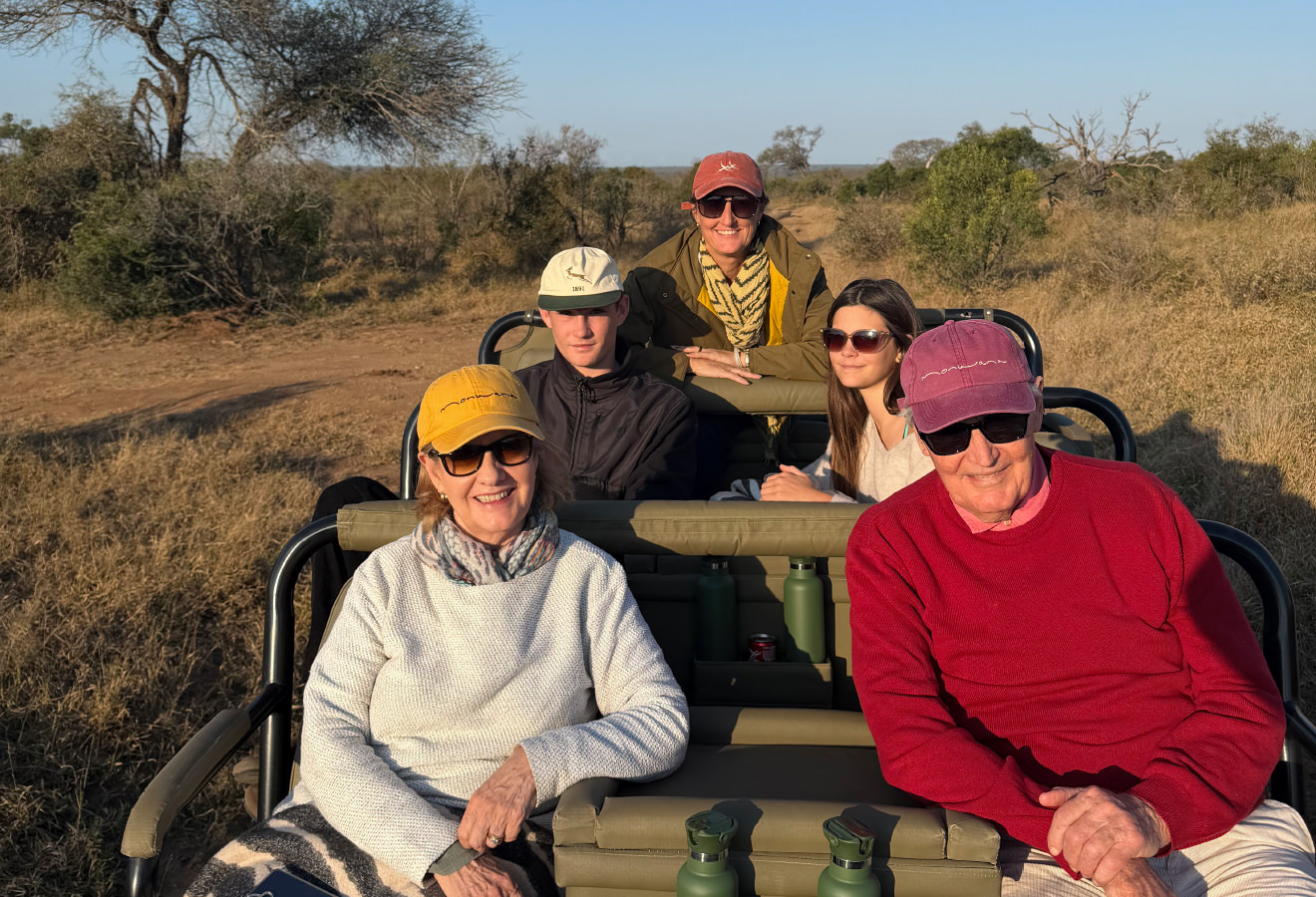
Three Generations in the Bush
Taking my parents and my children to the bush together felt rather like folding time in half. There was my father, one of the first people to teach me to love the bush, now sharing it with my children. They were delighted to discover that he had known me when I was apparently young and badly behaved. My father loves a good story.
Between sightings, in the gaps of vehicle chatter, we started a list: every bird, animal and tree we spotted. It began as a wholesome, educational exercise. It ended as blood sport. Binoculars changed hands at speed, the Birds Pro and Roberts apps were both consulted and both fiercely defended (a competition in its own right), and species were announced with tremendous confidence, then quietly revised. Some birds were identified three or four times over, with the certainty rising each time and the accuracy, I suspect, doing the opposite.
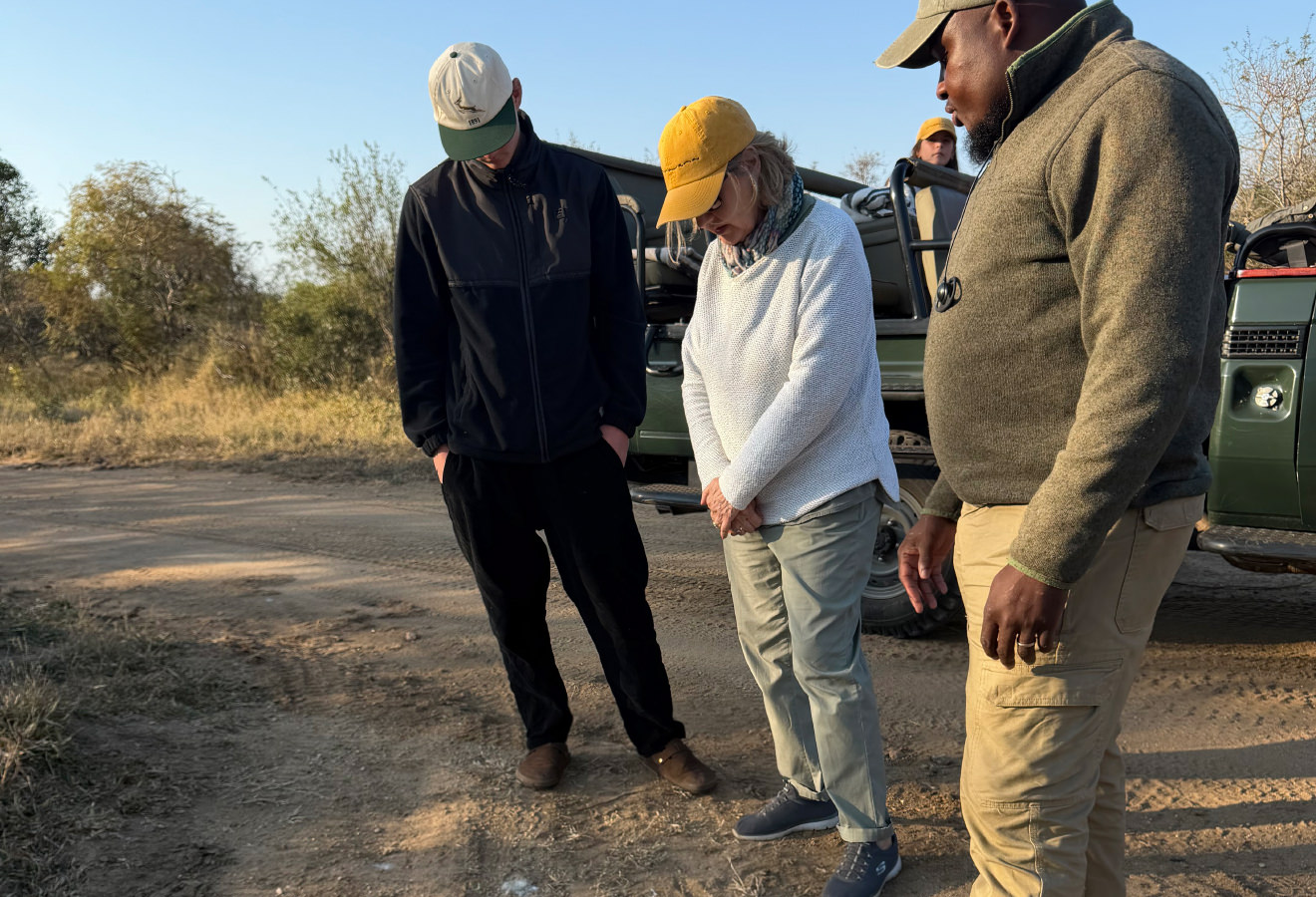
One of my favourite moments was watching my father and my daughter having tracking lessons with our tracker, all three of them bent over the ground with great seriousness. Having spent many hours tracking with my own tracker when I was a guide, I loved seeing this ancient knowledge being passed down to my children. I was also quietly, although perhaps not invisibly, proud of how much they already knew. Our tracker began with rhino spoor, assuming this would keep them occupied, only to discover that I had done some teaching of my own. He was forced to raise the standard rapidly and move on to mongoose tracks, which are considerably less obliging. There was something heartwarming about seeing the oldest and youngest members of the family side by side, united by a mark in the sand and the satisfaction of making their teacher work a little harder.
The bush, as always, moved easily between the sublime and the faintly ridiculous. We watched leopards mating, which was astonishing, powerful and not entirely comfortable viewing in the company of one’s parents and children. We laughed at lion cubs playing, all paws and tails as they trotted behind their mother along a path etched through the grass.
Then, one evening, we sat completely still as an elephant fed beneath a Torchwood. The full moon illuminated his form as he quietly searched for pods. The soft shushing of his trunk across the sand was the only sound carried through the darkness.
One morning, the mist was so thick that water droplets settled on our eyelashes and slowly soaked our clothes. My father became increasingly cold, so we buried him beneath an improbable number of zebra-striped blankets. Eventually, only a small portion of him remained visible. It was not his most dignified bush moment, but it was certainly one of our funniest.
We shared a bush breakfast in the open, settled on the bank of a dry riverbed beneath the shade of an enormous jackalberry, with the calls of guineafowl punctuating the stillness around us. Back at camp, elephants gathered at the waterhole. We watched them drink and move around one another while we sat comfortably nearby, a reminder that sometimes the best sightings come to you.
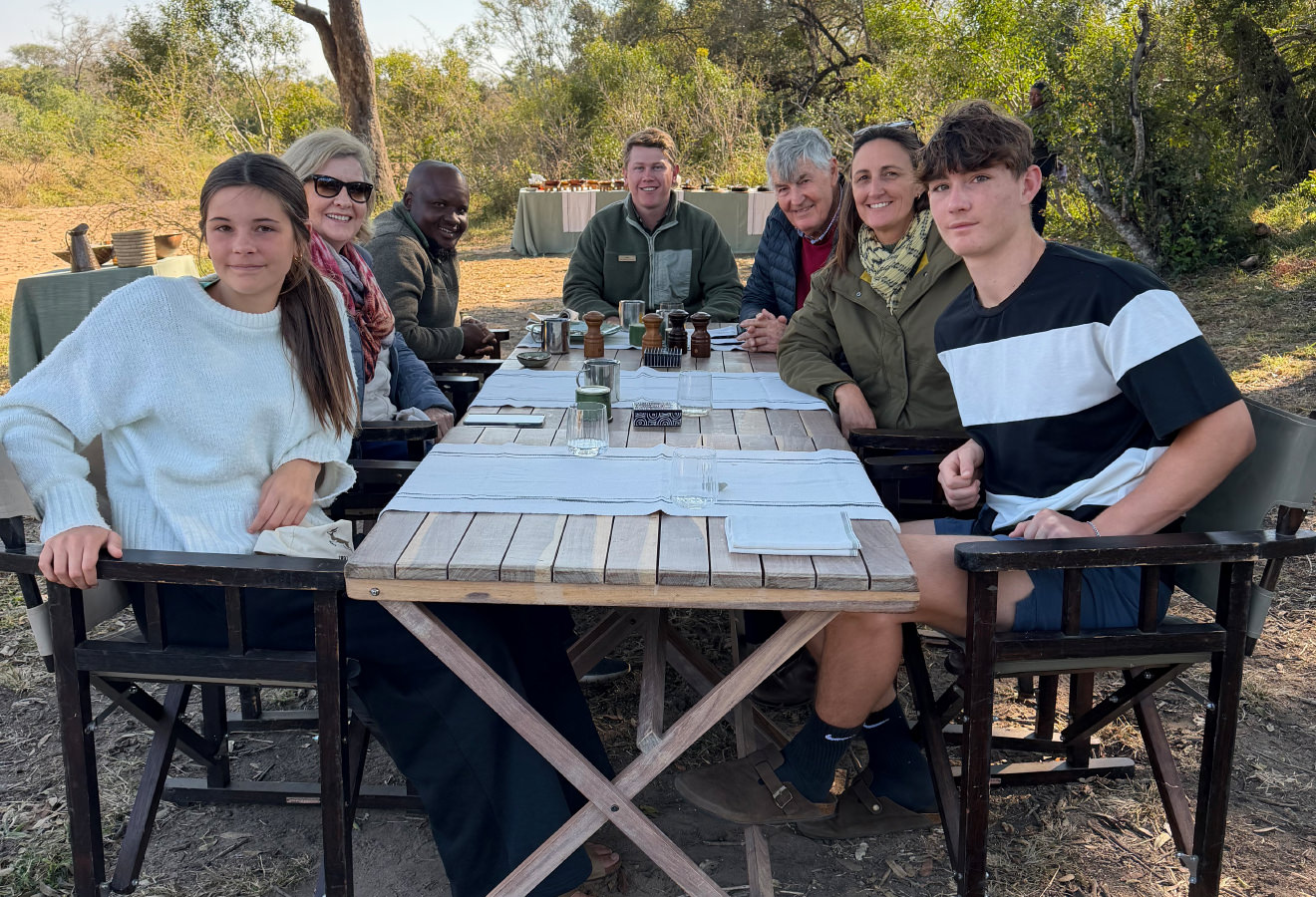
The moments between the game drives mattered just as much. We chatted around the fire and lingered at the dinner table. My father told my children stories about bush trips from when I was young, including several details I might have edited had I been consulted beforehand. I loved listening to him pass those memories on and watching my children discover our shared history through his eyes.
By the end of the trip, our lists were satisfyingly long, although probably not entirely reliable. What mattered more was everything that could not be counted: the stories retold, the laughter shared and the sight of three generations finding their own place in the bush.
