


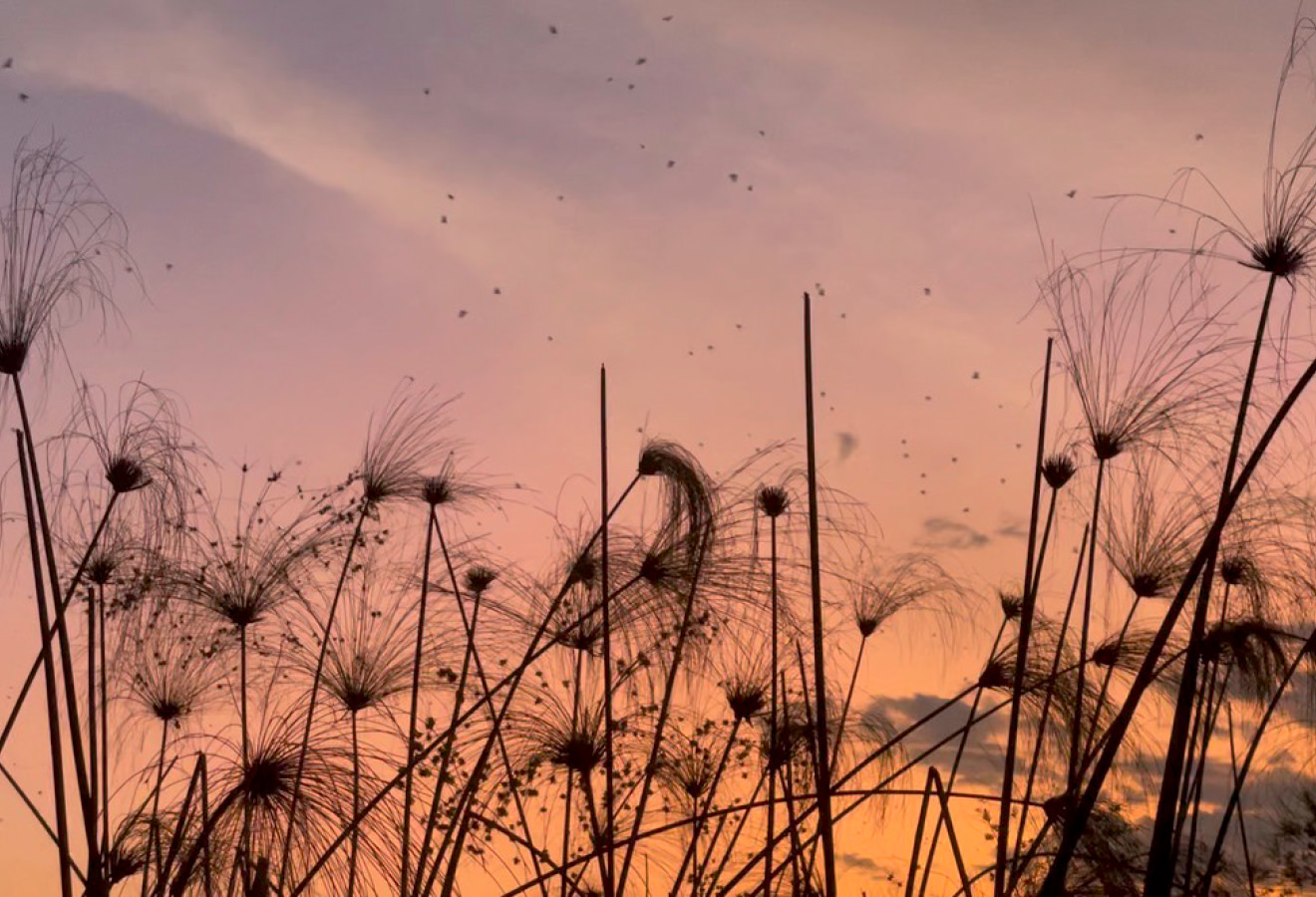
The Bats
The first time I heard about the bat migration in Zambia, I asked the person what kind of fool they thought I was. 10 million bats gathering in one place? What kind of an exaggeration was that? Then I was shown a photograph. I rushed home, asked my husband to pause the golf he was watching, and to come with me to see the famous bat migration taking place in Kasanka National Park. “Millions and millions of straw-coloured fruit bats descend in Zambia – all the way from the Congo. We absolutely have to go.”
Not a fool. But an optimist.
Some years later, in early January, a repeat client mentioned that he wanted to book a Bat trip as a solo traveller because, try as he might, he couldn’t find anyone else interested. I felt his pain.
“I’ll come with you.”
“Me too,” said the sister.
Then the solo traveller found he had another bat-shit crazy friend after all, and so we were four.
Without further ado, we booked a Bat migration to descend upon the Mushitu Evergreen Swamp Forest for later that year. Gosh, we were excited at the prospect of this adventure, now just a few months away.
COVID-adjusted, it only took us another 2.5 years to get there. Was it worth the wait? Yes.
10 million straw-coloured yesses.
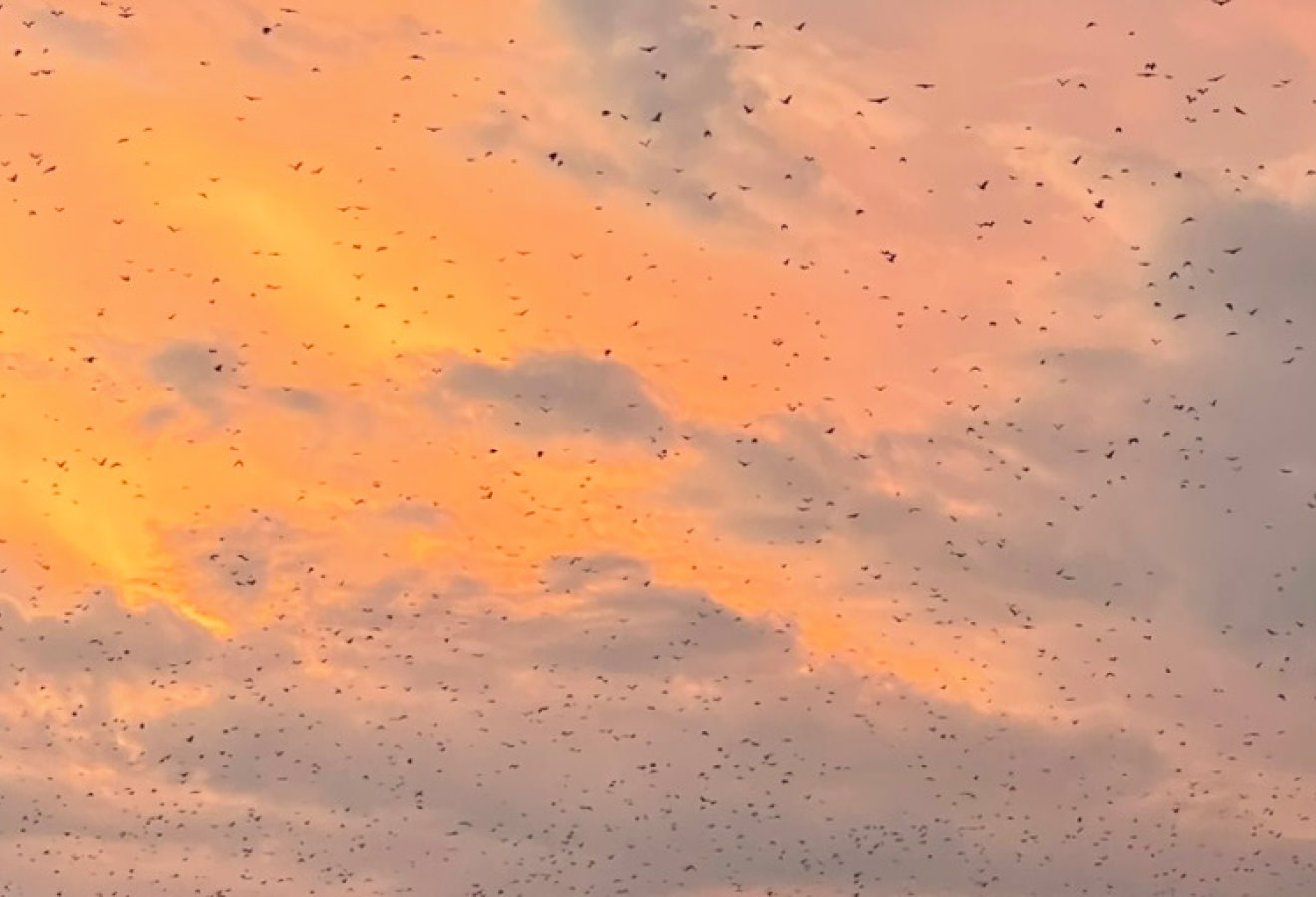
The bats roost in the forest during the day, rising out of the trees to forage at night, returning at dawn to the safety and coolth of the forest. That first afternoon, as we walked to the platform above the forest canopy, our guide, the truly wonderful and brilliant Simon, stopped and asked us to listen.
“Yes… Yes, we hear the river- it’s beautiful”
“No,” smiled Simon, “not a river. Those are the bats.”
The platform is 6 m high, and the ladder is at 180 degrees. Despite his physical disabilities, our client had clambered up the ladder with a broad grin. The ever-attentive Simon acted as his personal safety net. As a vertigo sufferer, I was cheered and encouraged by our client until I reached the top. Such is his generosity of spirit that I, with my working hands, feet, arms and legs but woolly nerves, was the one needing motivation and support. Africa reveals as much about the travellers as it does about the destination itself.
And then we waited. We were warned to keep our hands over our drinks, or they would be covered in bat guano. At first, the advice seemed somewhat laughable, given the clear late-afternoon sky. And then they started to rise out of the trees. More and more and more and more. Greeting the evening loam in swoops and circles, calling to one another with clicks and chatters and squeaks. The sky grew ever darker… not because of the loss of light at that point, but by the sheer number of bats.
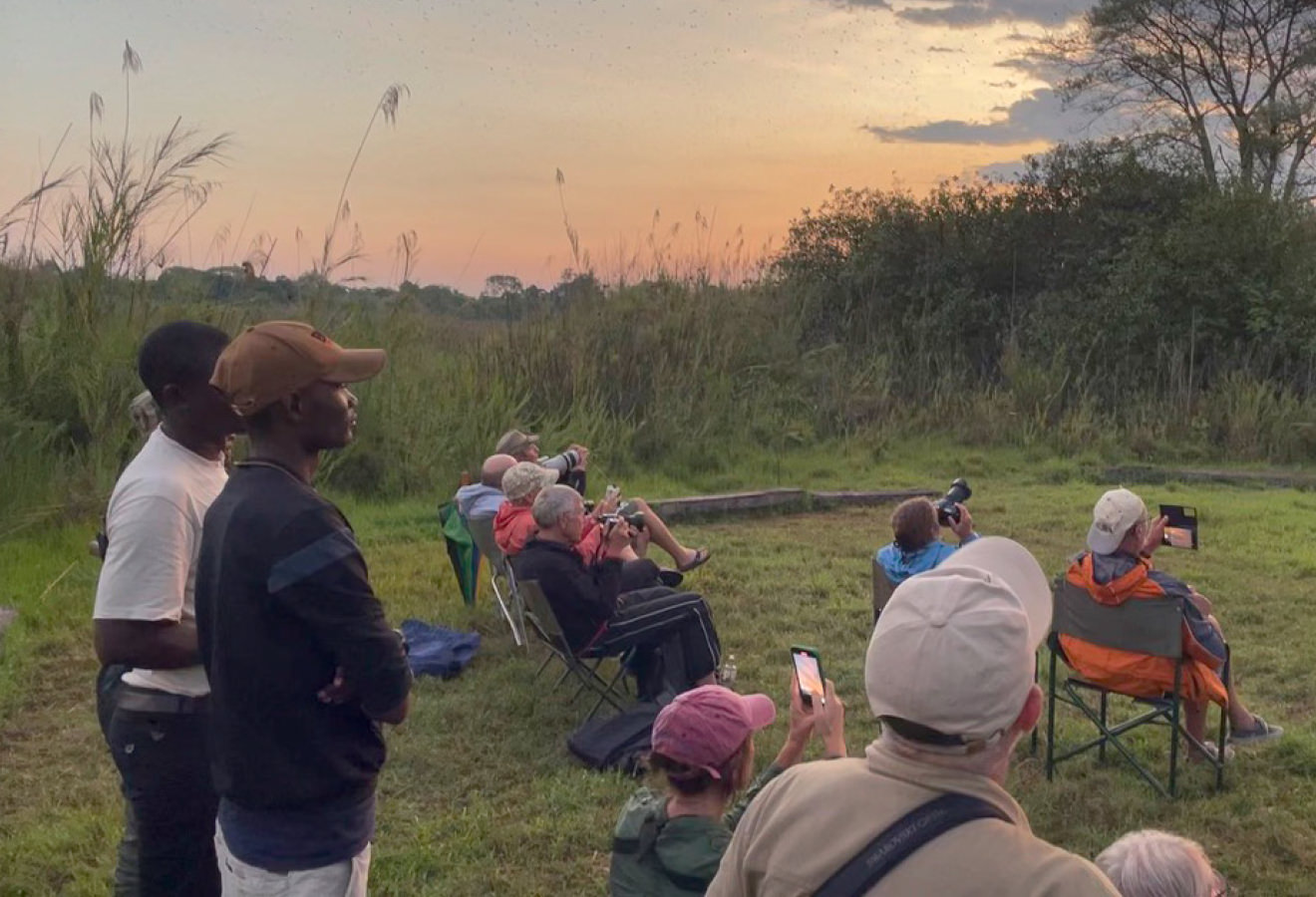
“Cup your ears” advised Simon. The humming intensified becuase quite simply, cupping your ears increases the volume as it helps your ears collect and focus more sound waves into the ear canal. It was thunderous. I could never have imagined that sound would be such a significant part of the experience.
As children, we would visit the aquarium and press our noses against the glass as swirling shoals of fish swam past in unimaginable numbers. It was like that. But there was no glass and no water: this was a chaotic squadron of flying mammals metres away from your face. It is not the same as a bird murmuration – there is no defined pattern to where any of the bats are flying; the sky is simply FILLED by them flying in each and every direction. There are no crashes. Ultrasonic echolocation works.
(Sound waves, ultrasonic echolocation. Can I just mention that science at school was never this fun.)
Chaos filled the sky as a Bat Hawk flew through the throng. It missed. Phew. While our seats in the sky may have felt like the emperor’s throne, we had no appetite for bloodshed. We were firmly Team Bats.
We spent three days in Kasanka. We watched the Bats from the high platforms and from the ground, at sunset and sunrise, with morning tea and rum cocktails of our own invention. It is truly a spectacle to behold, and that was without the Ross’s Turaco, the Kinder baboons and sitatunga.
The Bat migration is at its peak in October. The logistics are a rather unwieldy, but anything this unique is worth the extra effort.
